
For whom: Hatay Earthquake Solidarity, Rimmen Women’s Cooperative, ngo’s, residents in Çekmece and Hatay
With whom: Hatay Earthquake Solidarity, Architecture Sans Frontières UK, Critical Craft and participants
When: 2024
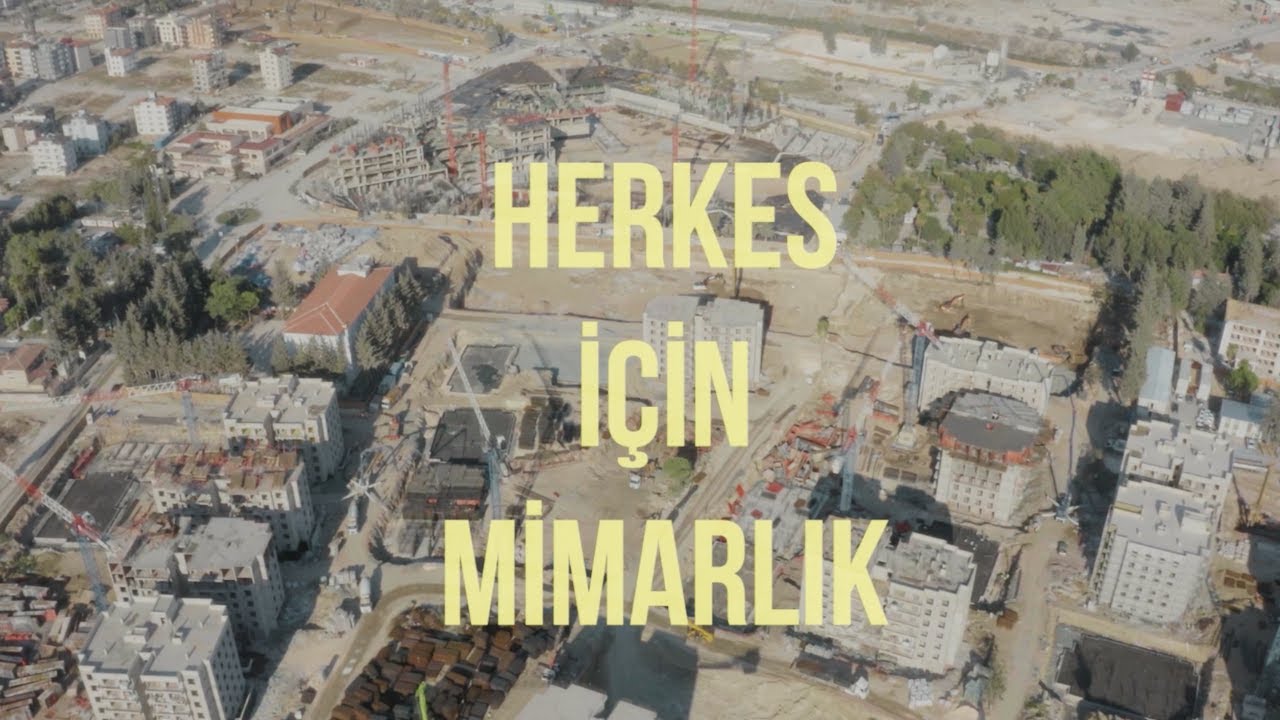
Çekmece Community Centre was designed and built as part of the ‘Revitalising Antakyaʼs Living Heritage: Community-led Reconstruction through Participatory Architecture and Planning’ project, in partnership with Herkes İçin Mimarlık (HiM, Architecture for All), Hatay Deprem Dayanışması (HDD, Hatay Earthquake Solidarity) and Architecture Sans Frontières UK (ASF-UK). With Sivil Toplum için Destek Vakfı (Support for Civil Society Foundation) and Turkey Mozaik Foundation as the main supporters, the project aimed to test, document and share more effective ways of restoring Antakya, preserving its rich heritage and ensuring its future development. Working together, the project partners aimed to influence official policy and planning through the realisation of community-led reconstruction in Antakya. In addition to the project partners, the Critical Craft team supported the design and implementation of the Çekmece Community Centre, and 55 individual donors contributed to the realisation of the project in addition to the main supporters.
The project consisted of three main activity packages. The first two of these focused on establishing a best practice model for community-led regeneration in Antakya and sought to demonstrate how community-led design and planning can make a tangible difference in the Çekmece (Defne) neighbourhood. First package of activities led by HiM, resulted in the construction of a communal space that will serve as a gathering place where residents of Çekmece can share their knowledge, memories and imagination. The second package of activities led by ASF-UK resulted in the development of a Community Action Plan that sets out principles and options for the reconstruction of the neighbourhood and the protection of its living heritage. These projects have demonstrated that residents and their organisations are not passive recipients of the reconstruction process, but can play an important role in planning and implementation. HDD carried out the third package of activities focusing on supporting, documenting and disseminating these initiatives among key stakeholders. HDD produced effective video documentation to support community-led reconstruction with local authorities and national and international groups involved in shaping the future of Antakya. Through its strong connections in Antakya, HDD also ensured long-term management of project results with local communities and their support networks.
Çekmece Community Centre was built with the aim of being a space open to the use of the people of Çekmece neighbourhood, for all residents of Hatay and all non-governmental organisations that would like to hold events here, with Hatay Earthquake Solidarity and Rimmen Women’s Cooperative as its main users and long term stewards of the space.
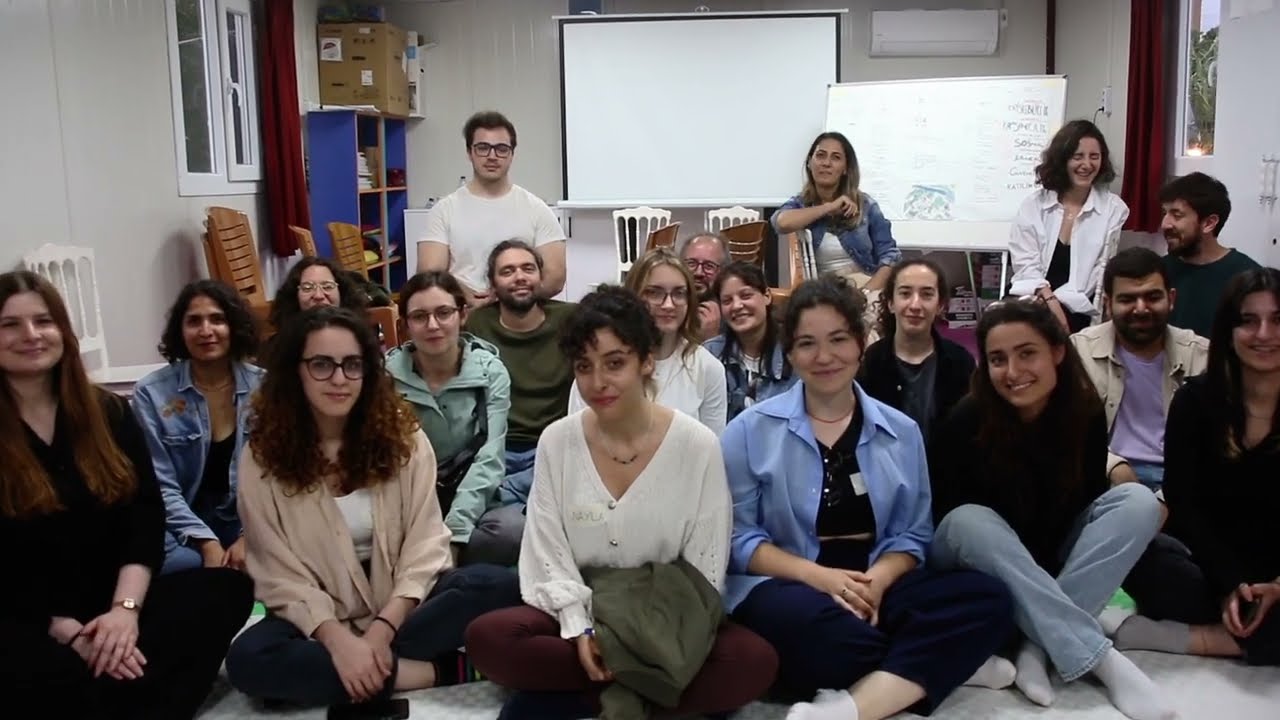
The design process of the building started with a workshop held on 4-5 May 2024 in the activity container of Hatay Earthquake Solidarity in Defne. The 16 participants of the workshop were mainly from Hatay, but also came from different places such as Adana, Istanbul and Gaziantep. In addition to the participant team consisting of architecture and landscape architecture students, teachers and architects, seven facilitator-participants from HiM and HDD and one member of ASF-UK were also involved in the design workshop.
At the beginning of the workshop, observations were made by visiting the project site.The team then moved from the field to the working space and listened to HDD’s requests and expectations about the space. Following this, initial design ideas were shared and discussed at the end of the day in a meeting attended by local neighbourhood residents. The groups continued their work on the second day based on the feedback from the first evening and presented their ideas at the end of the day to those from the neighbourhood and elsewhere. All the topics and ideas discussed during the two days were reviewed and gathered together on a single, large sheet of paper. The groups also produced posters and sketches of their design ideas. At the end of the workshop, the work so far was shared and a schedule of online meetings was decided in order to complete the design works by the middle of June and order materials for the beginning of July.
After the initial workshop, the design process continued with six weekly online meetings. Design decisions were re-evaluated in order to meet the need for a closed and undivided space, which was expressed as the most important need of HDD and all communities and organisations that operate/want to operate in Antakya. In addition to the physical limitations of the site, the capacity of HiM and the participating team to build with wood greatly shaped the design. Taking into account the suggestions of civil engineer Bedir Bekar, who consulted on the structural design, an expanding structure was created with the repetition of frames spaced 2.4 metres apart with a span of 4.5 metres. While the south façade was kept long in order to get more of the cooling south wind, which is very important in the summer months in Hatay, on the other hand, in order to balance the sun coming from this façade, the roof sloping towards the south was extended on this façade and supported by triangulating the uprights.
While a lower ceilinged space was designed in the opposite direction of the closed and high-roofed space, it became apparent that the site had been incorrectly surveyed when the implementation started and most of this section had to be removed due to the proximity of the building to the adjacent prefabricated buildings. A portion of this lower height space- just two of the seven portal frames – remained as a covered veranda space facing onto the weaving and soap workshop buildings of Rimmen Women’s Cooperative. At the same time, a generous front porch was created leading into the main double height space. After the revisions made in the field at the beginning of the implementation, a design consisting of 55 m2 closed space, an 11 m2 covered front veranda and a 12 m2 lower covered rear veranda emerged.
The first of the construction workshops in Çekmece was held between 1-18 July. 16 people participated in these works for varying periods of time, primarily for the fabrication and implementation of the footings of the building. These works, which were carried out with both hand tools and larger excavating machinery, took eight days, longer than planned due to the difficulty of working on a ground that had been poured with mixed fill material for years, and the unshaded daytime conditions approaching 40 degrees Celsius. After the foundations, most of the remaining time was spent preparing the main 7 timber frames of the building by first cutting and joining them together inside the co-operative buildings, and then standing them up on the foundations. Four of these frames were raised and protected to prevent damage until the work to be continued in September. In the first construction workshop, many of the materials were also brought to the site and stacked. During this workshop, HDD members could not be involved in the work due to the intensity of the Evvel Temmuz Festival. The fact that the number of daily participants was not as much as initially expected and the problems such as cleaning, water and electricity of the newly renovated apartment rented for accommodation also affected the pace of work and caused the workshop to finish at a point behind what had been expected in initial planning.
In the second construction workshop, which took place from 12 to 24 September, 12 HiM members and participants, many of whom were involved full-time, as well as 4 members from HDD, actively participated in the workshop, which considerably advanced the construction process. In these thirteen days, the remaining frames, floor beams, roof rafters, roof rafters and ceiling sub OSB cladding, wall frames were completed. During the workshop, members from HDD generously hosted the participants in their homes and cooked the meals together with the neighbourhood..
After the second workshop, the remaining works were completed on 3-6 October, 10-15 October, 25-29 October, 4-7 November and with short additional works in the week before the opening on 21 December. To help with the final works, a carpenter who had previously worked with HDD was also involved and completed the remaining roofing, insulation, floor and wall cladding, doors and windows, external stairs and ramps together with HDD members. HiM members and participants were also involved in the work between 3-6 and 10-15 October.
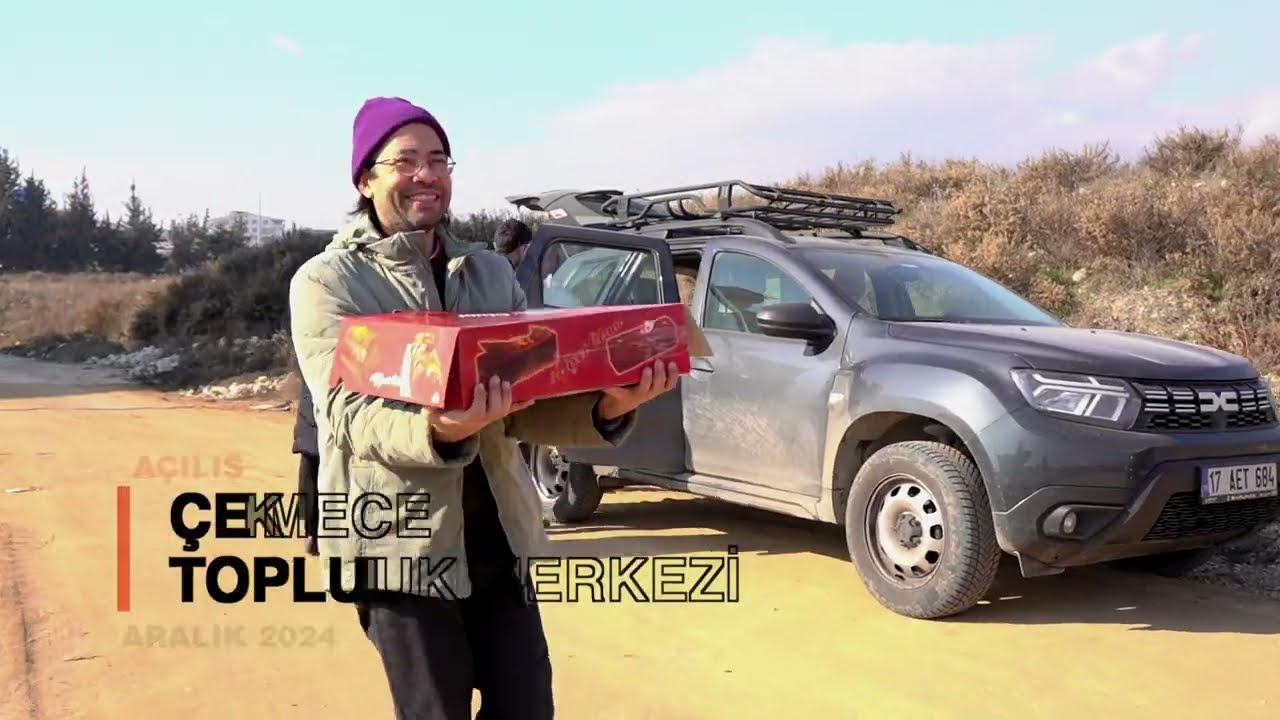
After the completion of the construction works, an opening event was held at Çekmece Community Centre on 21 December. The design and implementation works were shared with the participants through a presentation and a film prepared by HDD. At the end of the event, HiM, HDD and ASF-UK members and process participants had an evaluation meeting where they shared their feelings and thoughts about the project process. After the opening event, as part of the dissemination and evaluation of the project, a booklet containing the thoughts of those involved in the design and implementation works, drawings and photographs of the project was prepared and published online. The Çekmece Community Centre started hosting meetings even before the opening event, and has been actively used by HDD, Rimmen Women’s Cooperative and several other civil society organisations since then.
The booklet about Çekmece Community Centre can be found at this link.
You can access the photo album of the project here.
Design Team: Ali Berkay Tenlik, Aylin Ay, Bedir Bekar, Bilge Esmer, Dilara Atalay, Ebru Gece Mirioğlu, Ela Gök, Emrah Bolat, Emrah Güllüoğlu, Emre Gündoğdu, Erdem Üngür, Esin Dönmez, Esra Töle, Fırat Altundağ, Francesco Pasta, Gökhan Şahin, Gizem Güzel, Hacire Özkan, Hena Subaşı, Hülya Kavuk, İlayda Sakallı, İrem Koçak, İris Eryılmaz, Mert Aslanyürek, Nayla Eroğlu, Nihal Geçim, Orhan Özüpakçe, Pelin Nihal Şatana, Sam Price, Seda Yüce, Sinem Özdemir, Yaren Sakar
Implementation Team: Ayşegül Yiğit, Burak Ercanli, Cem Oflazoğlu, Çınar Ceyhan, Deniz Çuhacı, Dilara Atalay, Ebru Gece Mirioğlu, Ela Gök, Emrah Güllüoğlu, Emre Gündoğdu, Erdem Üngür, Esra Temiz, Esra Töle, Eylül Dinç, Gökhan Şahin, Gülşah Aykaç, Hacire Özkan, Hanife Özalp, Hatice Işıl Uysal, Hasan Göçer, Hazal Doğruel, Hıdır Onur Bahap, Hülya Kavuk, Hüseyin Akmunzur, Hüseyin Göçer, İlyas Semih Keçeli, Mehmet Çelik, Mert Aslanyürek, Mine Akkaya, Nayla Eroğlu, Nihal Geçim, Sam Price, Seda Yüce, Sercan Atay, Şule Toptan, Yaren Sakar
Individual Supporters: Alex Balls, Ali Höcek, Ann Price, Anna Gök, Anna Price, Aylin Bayram, Cansu Sözer, Charlotte Palmer Craggs, Cynthia Corsiglia, David Fairman, Deniz Gök, Didem Tarlan, Dilara Kara, Emin Dönmezer, Emre Gündoğdu, Erdal İnci, Erdem Üngür, Fevziye Çuhacı, Fırat Yeşil, Gamze Aslan, Gülşah Aykaç, Hakkı Çuhacı, Hatice Cansu Cürgen, Hayrettin Günç, Inken Baller, Johanna Madden, Kerim Eken, Mahiye Seçil Dağtaş, Mehmet Ali Gasseloğlu, Mehmet İstanbullu (İstanbullu Kereste), Melisa Aslan, Mesut Savcun, Mithat Külür, Naime Dede, Nehli Dede, Nicola Price, Oğuzhan Çokgünlü (Bilen Otomotiv), Özkal Yüreğir, Paola Camasso, Peter Balls, Saba Höcek, Semir Uygun, Sıla Yılmaz, Suzanne Edwards, Tim Gök, William Price, Yasemin Cennet Sünbül, Zeynep Kuban Tokgöz + 8 anonim kişi
* This project has been prepared with the support of the Local Empowerment Support Fund, which is a collaboration between the Support Foundation for Civil Society and the Turkey Mozaik Foundation. Herkes İçin Mimarlık (Architecture for All) Association is solely responsible for its content and does not in any way reflect the views of the supporting institutions.